 |
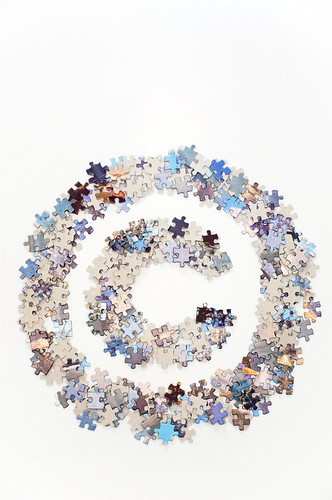
| Image by Horlia Varlan (CC BY 2.0) |
@CKmacleodwriter
Are you a nonfiction author? Do you use photos or images in your ebooks? Do you self-publish? You may not know that using images incorrectly can get you into lots of trouble.
Copyright Infringement
Not long ago I was reading a self-published book that contained a watermarked image. I didn't know who the image belonged to. The image had been copied from a website that contains photos for sale. The author was using the image as an example to show readers how to design a book cover. Seems innocent enough, right?
When I saw the photo, my editor's radar went on high alert (editors look for and flag potential copyright issues). I was fairly certain that the author didn't realize that
- you can't copy a photo from anywhere on the Internet and use it in your book -- especially not from a stock photo site; and
- she was using someone else's work in a book she was intending to profit from.
"But I didn't Know!"
Let's bring it close to home: what would you think if an author lifted one of your blog posts and pasted it in a book he was intending to sell? Ouch, right? I didn't want the author from my example above to get into trouble, so I contacted him and very gently pointed out the potential copyright infringement. Even though he probably didn't realize his mistake (I never did hear back from him), according to my understanding of copyright law, "I didn't know" isn't really defensible -- so forewarned is forearmed.
If you're self-publishing, you're taking on the role of a publisher, which means that you don't have a team of people watching your back. To stay out of trouble, it's a good idea to get a general understanding of copyright law. This PowerPoint presentation by copyright lawyer, Dana Newman, is a great place to start.
Getting Permission
Is it ever okay to use someone else's work? Sure it is: if you get their permission and then give them credit for their work. Sometimes the creator is only too happy to allow you to use a photo, even for free, and sometimes she'll ask for a small fee for the privilege. I usually credit a photo like this:
 |
| Image by Corina Koch MacLeod, used with permission |
Here is a sample letter you can adapt to ask for permission to use a photo:
Dear Mr/Ms. [Insert image creator's name]:
On a recent Internet search for images, I came across a photo you took/illustration you created featuring [briefly describe the photo] – it’s beautiful.
I am a writer, and I’m currently preparing a book about [briefly describe your book].
I’m writing now to ask if you ever grant permission for writers to reproduce your work, and if so, would you consider letting me include this photo/ illustration in my book? My market is [briefly describe your market]. My book is designed to [insert brief description of your book].
Thank you for considering my request. If you’d like further information, such as a copy of my book, please let me know.
Best regards,
Letter by Carla Douglas, used with permission.
It's Okay to Pay
To prevent any potential copyright issues, you can use stock photos for any images you want to include in your book. You can buy images, sometimes rather inexpensively, from websites like iStockPhoto or Dreamstime. Be sure to read the fine print, though. Some images can only be used for a certain number of downloaded books (if you're publishing ebooks) before you have to re-license the image. If your book is a hot item, be sure to check the licensing agreement for your cover photo and any interior images.
Free Images
If you're using free images from Creative Commons, check the licensing agreements to make sure you can use them for commercial purposes. Otherwise you need to ask for permission from the creator to use the photo in a book you intend to sell.
All of the principles in this post apply to anything that someone else creates. If you didn't create it, you need to ask permission or pay to use it. And always remember to credit someone else's work.
Disclaimer: I'm not a copyright lawyer. Editors simply flag items that might be in violation of copyright. Copyright law is pretty complicated and not entirely accessible, so if you're not sure about the rules, consider consulting a copyright lawyer.
Related Posts
How to Avoid Plagiarism
Why Plagiarism Persists
Seven Questions Your Editor Should Ask You
Great topic. I got a scare (not me--through an efriend) this past summer and I have yet to recover. I drilled copyright issues into my students this year!
ReplyDeleteJacqui,
DeleteI'm pleased to hear that you're teaching copyright to your students. In the past, my 10-year-old has been tasked by his teachers to find two images on the Internet, print them, and bring them to school to add to a school project. Until now, he thought it was okay to use any image from the Internet in any way he wanted to.
I introduced him to the Creative Commons website, and explained to him that he needs to check if it's okay to use a photo, and if it is, he needs to properly credit the photo. He was very surprised to learn
this.
Same story in my neck of the woods. My 4/5th graders were stunned when I read the copyright law to them (rephrased for their age) and shared my scare stories. They insisted they could take whatever they wanted from Google images. We talked it out--for about forty minutes. No one got bored. Several dragged their parents in at the end of the day to have me tell them too!
DeleteSeeing their reactions, I wished I'd started years ago.
That's outstanding, Jacqui. Bravo! The Internet is a generous place -- so many people are willing to share their work. But that has to be balanced with a respect for the wishes of writers, artists, photographers, and creators. I'll bet your students got that message.
DeleteIntent to profit has no bearing on whether a given use is a copyright infringement. It may help rule out a use as being fair use, but it is not in itself a requirement for a copyright claim. Thought I'd clarify that to avoid any confusion.
ReplyDeleteThat's a good point. Thank you.
DeleteIf I understand you correctly, using someone else's images, even without an intent to profit (for a school project, for example), without permission to do so, could also be in violation of copyright.